When the internet comes together, anything is pastable.
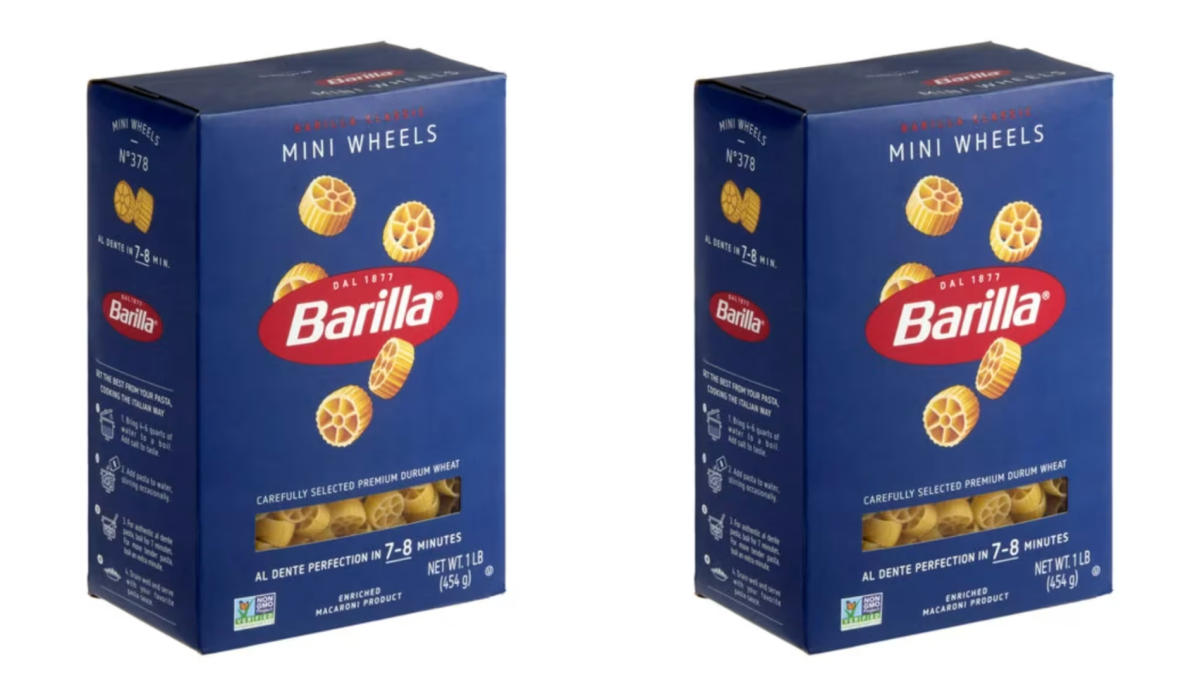
Threads users pitched in for a mom, identified only as Kate, who shared over the summer that her son’s only “safe” food, Barilla’s Mini Wheels, had been replaced by Racing Wheels. Kate’s son, according to her post, has autism and a genetic disorder, and “will not touch” the new shape.
“If you know of anywhere I can still get these, please reach out,” the mom wrote in a June post. “I am willing to pay just about anything to avoid a feeding tube for my son.”
After asking the internet for help in finding some stock, Kate was greeted with an outpouring of support from strangers, who began to buy up dozens of boxes to ensure that the mom would have a supply to turn to if her son needed it. The post has since gone viral, with more than 10,000 likes and hundreds of retweets as of Sept. 17.
In a recent statement provided to TODAY.com, a Barilla spokesperson said the company has been in touch with the mom and offered her a one-year supply of Mini Wheels.
“We’ve been incredibly touched by Kate and her son’s story, and the number of people who have rallied around their family,” the spokesperson said in the statement.
Kate did not respond to multiple requests for comment from TODAY.com, but in a later post on Threads, the mom said she was floored by the support from social media.
“I am ASTONISHED and crying my eyes out at the kindness I’m finding here. I see every message & DM offering to help and am sitting here in TEARS,” Kate wrote, explaining at the time that her family was still exploring different options for her son. “You are incredible people & I told my nonspeaking boy how loved he is & thank you on his behalf, too.”
Barilla discontinued the Mini Wheels, swapping it out with a Formula 1-themed Racing Wheels product, the company spokesperson confirmed. Though similar, the new replacement is larger and features a more complex axle.
In her initial post, Kate explained that her son has been in feeding therapy, a type of therapy that can help those with sensory aversion, or other issues, reduce their sensitivities to foods and improve their overall eating experience. She explained that her son, who sees “lots of doctors and specialists,” drinks a sole-source nutritional formula “But not enough to replace these vital calories.”
Several social media users offered to stock up for the mom. One user in particular posted that they bought the entire supply of Mini Wheels at their local grocery store — a total of 29 boxes — for the family.
Many others shared reviews on the Barilla website, requesting that the company bring the product back for the child.
“There is a little boy in New York who has lost his safety food. I’m sure there are many others as well,” one review reads. “Please bring back the mini wagon wheels pasta. Or if you have a surplus, please do the right thing.”
In the statement to TODAY.com, the Barilla spokesperson said the company connected with Kate back in June and sent along a couple other types of short-cut pasta for the family to try. By September, the company shared they had discussed further solutions with the mom over the course of a few days and finally landed on one.
Feeding expert Malina Malkani tells TODAY.com that food sensitivity is common among those with autism, with the issue impacting an estimated range of 23% to 69% of individuals with autism. Contrary to popular belief, having food sensitivities and selectivity is far different from just being a picky eater, Malkani says.
“For most of us, running out of a favorite food or a favorite snack, it’s kind of like a mild inconvenience. But for a family who’s managing autism and a feeding disorder … a discontinuation of a specific food from a brand can mean that their child stops eating for days, and that’s not about food preferences,” Malkani, author of “Safe and Simple Food Allergy Prevention,” explains. “It’s about the neurology of the child. It’s not about stubbornness.”
Malkani adds “one of the pieces of advice that I see in mom groups all the time that makes me upset is when they say, ‘Oh, the child will just eat when they’re hungry. Just starve them out.’”
Simply substituting one particular food with another similar one doesn’t always work, Malkani adds.
“That substitution may feel neutral to us, but to the child’s nervous system, the texture feels different. The sound when they chew it feels different. The temperature, the visual sameness,” Malkani says. “These are all data points in a sensory sensitive brain that that sensory sensitive brain is tracking simultaneously, and when those change, it can be very discombobulating for the child.”
Malkani recommends that families who have children with food sensitivities attempt to pre-emptively expand the number of safe foods the patient has as best they can. One tactic, she says, is “food chaining,” which involves bridging from one safe food to a similar one through “small, single-variable changes over time.”
“It takes a lot of patience,” Malkani says, but it’s worth it in the event that a product is discontinued.
This story first appeared on TODAY.com. More from TODAY: