One woman’s medical emergency might open your eyes to a costly “gap” in health coverage.
“I probably would have died if the ambulance did not show up,” said Sophia, who asked NBC Bay Area not to use her last name. She was walking with a friend last year when she suddenly felt sick.
“My friend called 911,” Sophia said. NBC Bay Area obtained a recording of the 911 call.
“She’s cold as ice… She’s drooling,” the caller said.
An operator asked, “Is she responding normally?”
Hurriedly, Sophia’s friend said, “No!”
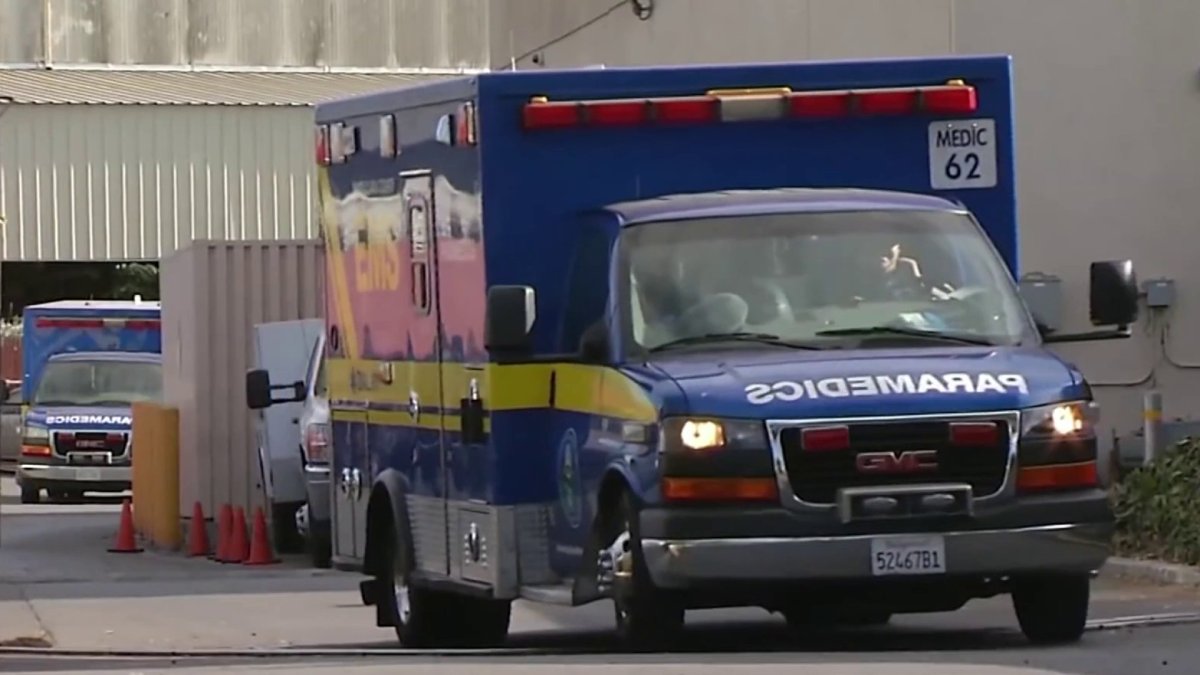
An incident report shows Sophia’s eyes were “swollen shut.” Medics rushed her to the hospital by ambulance. She spent time in intensive care for a severe food allergy, but recovered.
“It was pretty scary,” Sophia said.
Next, Sophia said she braced for her bills. “I have insurance through my husband’s work,” she explained.
She expected a 20% co-pay. Maybe a couple hundred dollars. But then, a surprise ambulance bill. Sophia was on the hook for a $4,517 balance because her insurance company, Cigna, only covered $927 of the $5,444 the ambulance company charged.
“I was shocked,” she said. “That’s a lot of money..”
Sophia went digging and found AB 716.
“We ended surprise ambulance bills in the state,” said Assemblymember Tasha Boerner, from Encinitas. She told NBC Bay Area that she heard from many constituents – like Sophia- who were caught between a health plan and an ambulance company over an emergency ambulance ride.
“It’s really heartbreaking,” Boerner said. So, she sponsored AB 716 to stop surprise ambulance bills. It’s now state law. Since 2024, California law has basically told health plans and ambulance companies to work out their billing disputes themselves, and stop sending patients a bill for the balance.
“It was such an obvious gap to close,” Boerner said.
But, it turns out AB 716 doesn’t apply to Sophia and millions of others. Why? A surprise technicality. Sophia doesn’t actually have traditional health insurance. She’s part of a “self-funded health plan.” That means her husband’s employer pays claims in the background, while Cigna handles front end administration. “Self funded” plans are generally federally regulated, so state laws like AB 716 do not apply.
“We just don’t have jurisdiction over the federal plans,” Boerner explained.
If you work for a large company, your insurance card likely says “self funded.” An Employee Benefit Research Institute report estimates about 75% of companies with 500 or more workers have “self funded” health plans.
Federal law has a “no surprises” act, too. But here’s another surprise: it does not cover ambulance bills. a Harvard law school publication recently called ambulance bills, “The Last Gap in the No Surprises Act.”
“I really urge congress to close that gap,” Boerner said.
AMR, Sophia’s ambulance company, told NBC Bay Area it “would welcome a change to the law requiring federally regulated health plans to pay the approved rate for emergency ambulance services.”
With neither federal nor state protection, it looked like Sophia had to pay the big, $4,500 balance bill for her emergency ambulance ride. Then, one final surprise. NBC Bay Area asked Cigna about Sophia’s case. It said somewhere in the billing process Sophia’s lifesaving ride was charged wrong because in Santa Clara County, the county sets ambulance rates.
Cigna said, “Thank you for bringing this to our attention. The claim has been reprocessed in accordance with county-established ambulance rates.”
Sophia said her $4,500 bill then dropped to just $300.
“Thank you for all your help. I really appreciate it,” she said. “I really felt like I wasn’t getting anywhere on my own. I felt like I was getting the runaround.”
When you have health plan problems, government regulators can help you file an official complaint.
The state covers traditional health insurance with the Department of Managed Health Care.
If your health plan is “self funded,” you can turn to the federal government’s Employee Benefits Security Administration.
To know which plan you have, look at your insurance card or talk to your employer’s personnel department.